
Greece is expanding renewable generation and adapting its infrastructure under the Paris Agreement, the EU’s Green Deal and Fit for 55 package, and its own National Energy and Climate Plan (NECP) and Climate Law. It aims to make renewables the mainstay of its energy mix, reduce its dependence on fossil fuels by 2030 and end it by 2050.
The rapid growth of renewables also brings new technical requirements and poses technical and economic problems that need to be resolved promptly. Under present conditions, it is vital to develop systems that can store electricity generated from renewable sources and to give them a clear, reliable regulatory framework in which to operate.
Why is it so urgent to integrate energy storage? The number of renewable energy projects operating or under development in Greece has become practically unmanageable. Around 13 GW of renewable capacity is already operating, and another 16 GW of projects with grid connection offers is waiting to come online. Applications from new renewable projects awaiting connection terms account for more than 40 GW. That takes the total to 69 GW, even before any projects that may be developed from now on are counted.
The surplus of renewable electricity expected at particular times of day, together with the variability of renewable generation, poses major technical challenges for grid capacity and power balancing, as well as economic challenges when marginal electricity prices fall to zero. It also creates an opportunity to make storage central to balancing the system and to use it to support a transition to a greener energy mix that is both economically feasible and technically secure.
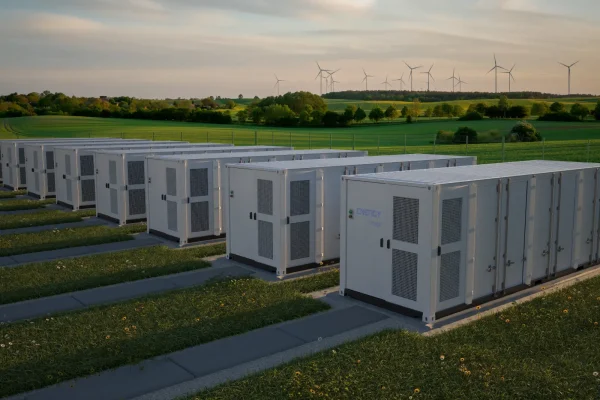
The updated NECP, published for consultation on 22 August, identifies storage with sufficient power and energy capacity as a prerequisite for integrating more renewables into the country’s energy mix. Electricity storage plants will be able to displace conventional generation at peak times by storing electricity mainly around midday, when renewable output is high. Some of that electricity is already being curtailed, and the amount is set to grow exponentially.
Stand-alone storage systems will participate in the electricity markets, helping to smooth price swings over the course of the day, a pressing problem at present, and to bring down the prices that consumers ultimately pay.
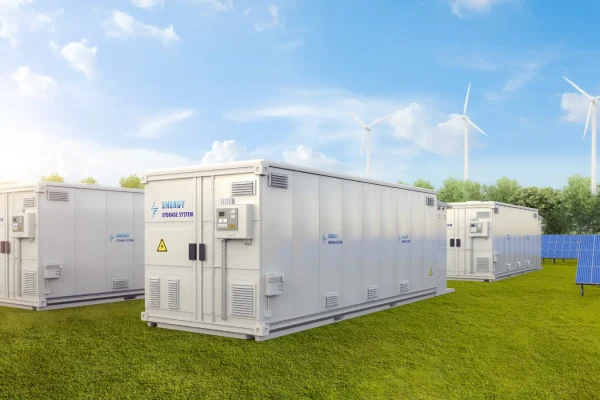
Storage systems using batteries can also be paired with renewables. They allow a hybrid plant to make the best use of the electricity it generates and can help to lower electricity prices.
The updated NECP ultimately envisages 4.3 GW of battery storage and 1.7 GW of pumped storage by 2030, giving a combined power capacity of 6 GW.
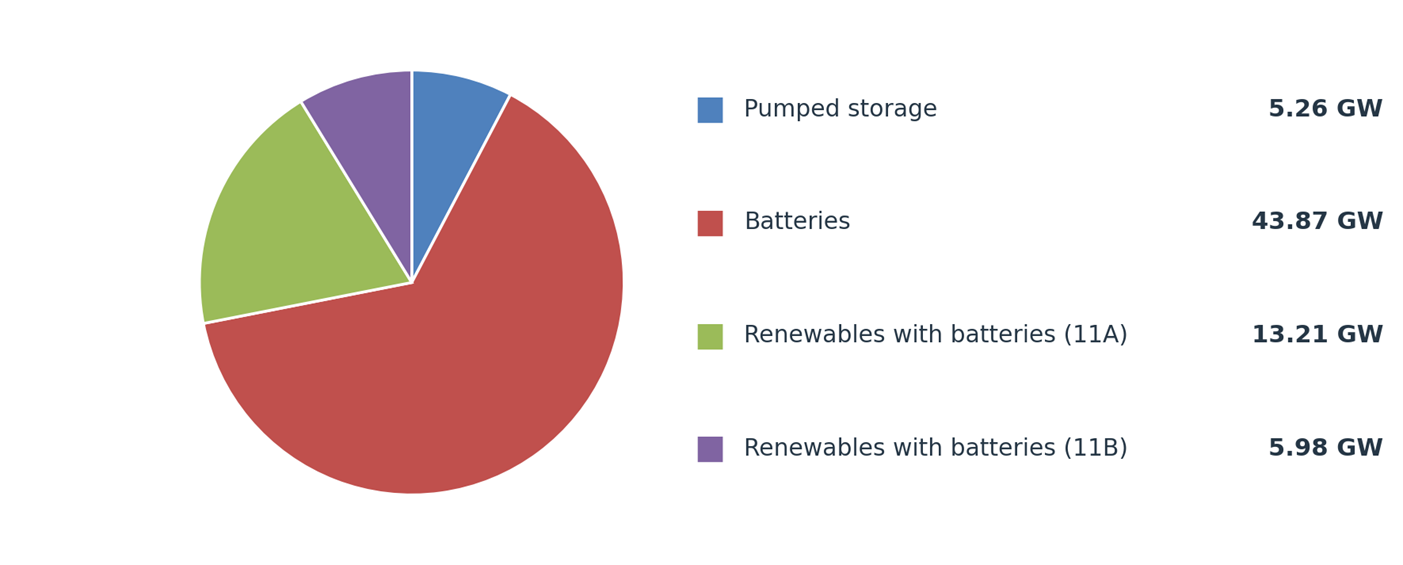
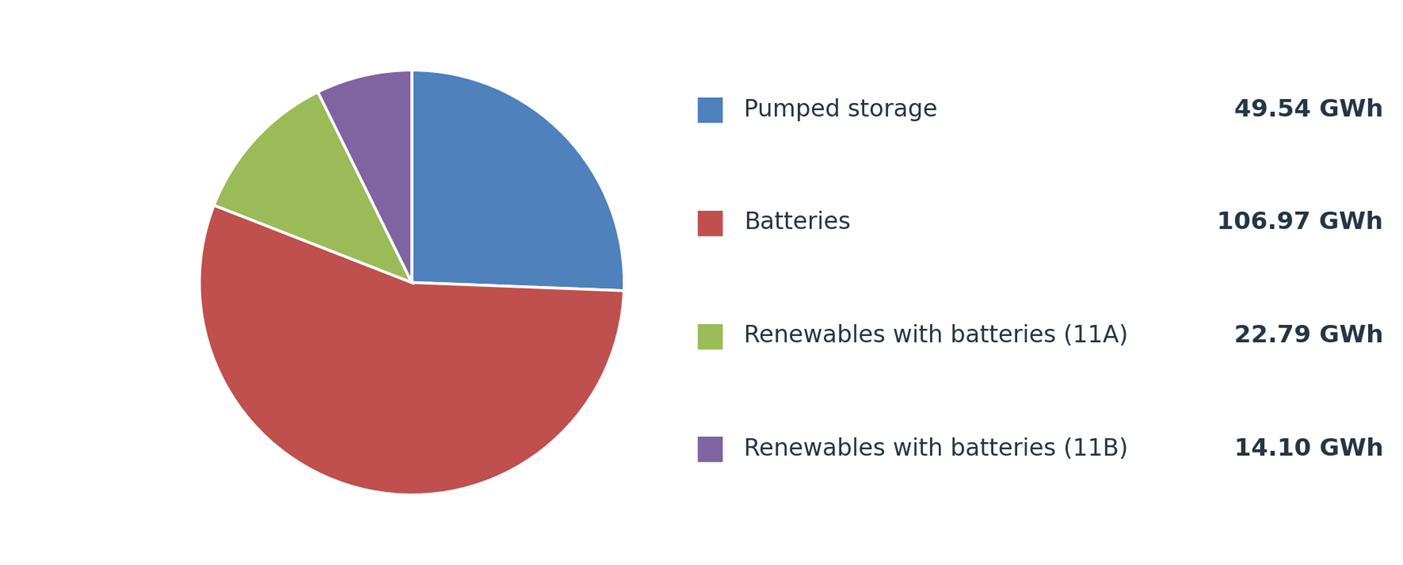
The electricity storage systems and hybrid renewable projects with storage in the licensing register of the Regulatory Authority for Waste, Energy and Water (RAAEY) already represent several times the capacity envisaged in the NECP. Licences issued for battery storage cover more than 40 GW of power and over 100 GWh of energy storage capacity. Pumped storage licences account for 5.26 GW and 50 GWh. Licences for ‘special projects’, which combine storage with renewables under Article 10(11B) of Law 4685/2020, account for almost 6 GW of renewable generating capacity and 14 GWh of storage.
Including licensed category 11A renewable projects and licensed hybrid projects on the islands brings total storage power to an impressive 68 GW (Figure 1) and energy capacity to 193 GWh (Figure 2). These figures confirm the strength of the interest seen over many years.
Yet the only storage plants operating in the domestic market today are the older hydroelectric plants with pumping capability, with a total installed capacity of around 700 MW. The Greek electricity system appears to have reached its limits. Increasing curtailment of renewable generation and zero or even negative wholesale prices in the day-ahead market are evidence of the difficulties this presents.
The government should move Greece as quickly as possible towards the energy transition and genuine energy independence. One important milestone for electricity storage in Greece was the support scheme for stand-alone battery systems. Under Law 4951/2022, the Greek government set in motion three auctions to support large-scale batteries with a combined capacity of 1 GW. The third and final auction is still pending. It covers 300 MW with a minimum duration of four hours, equivalent to 1,200 MWh of storage capacity.
Complex technical, economic, social and political decisions still have to be made under considerable time pressure. The following steps are needed.
- Complete the regulatory framework as a matter of urgency, setting out how storage plants can participate in the relevant markets, particularly the balancing market, and what rules govern their participation. The last public discussion of market rules for electricity storage systems took place during the Independent Power Transmission Operator’s (IPTO) public consultation in April 2023. Since then, two auctions have awarded operating and investment aid to plants totalling 700 MW, yet the rules have progressed no further. With the first storage plants expected to enter operation in 2025, the main details of market participation must be settled as soon as possible through meaningful consultation with market participants.
- Finalise and publish the methodology for annual support for electricity storage systems. It should clarify how and when compensation is settled, how long the regulatory period lasts and how projects are grouped, and resolve the other outstanding questions.
- Remove the provision for imposing static operating restrictions on storage plants. The technology is inherently capable of responding dynamically and with considerable flexibility in the electricity markets.
- Launch the third and final auction for storage plants with a four-hour storage requirement. Although the Greek electricity market has changed rapidly over the past three to four years, its storage market is still in its infancy. This makes regulatory certainty particularly important for investment support schemes that have already been approved and set in motion. Completing the current scheme must in no way prevent or delay the issue of connection terms to plants that wish to participate freely in the relevant markets. Renewable generators already have both options: they can participate in a support scheme or enter the market without aid.
- Begin introducing a mechanism to remunerate available capacity as soon as possible and establish the competitive procedures it will require.
- As part of its efforts to promote storage for system balancing, the government should also support storage facilities that can draw electricity from and inject it into the grid and that are paired with renewable generators, under Article 10(11B) of Law 4685/2020.
Greece is right to meet as much of its energy demand as possible from renewables. It aims to reduce its environmental footprint substantially and make its energy sector more competitive. Electricity storage systems can and should play a decisive role by enabling the country to integrate renewables safely and efficiently and build a resilient, sustainable energy future. We cannot afford to lose any more time.